
Smart Ring vs Apple Watch, Samsung Galaxy Watch, Garmin & More — Which Should You Buy?
| ⚡ Quick Answer — Oura Ring vs Smart watch: Which Should You Buy? The Oura Ring and a smartwatch serve fundamentally different purposes. The Oura Ring is a passive, screenless biometric sensor optimised for sleep tracking, recovery, HRV, and long-term physiological awareness — worn 24/7 like jewellery. A smartwatch (Apple Watch, Samsung Galaxy Watch, Garmin) is an active device with a screen, GPS, real-time workout coaching, notifications, and smart features. Oura wins for sleep accuracy, battery life (7–8 days vs 18–24 hours), discretion, and passive health monitoring. Smartwatches win for GPS, live workout stats, notifications, ECG, fall detection, and all-in-one convenience. 40% of Oura Ring users also own an Apple Watch — the most popular verdict is to use both. |
1. The Core Difference: Ring vs Watch Philosophy
Before diving into spec-by-spec comparisons, it is essential to understand that the Oura Ring and a smartwatch are not competing for the same job. They represent two distinct philosophies in personal health technology — and recognising which philosophy aligns with your lifestyle is the fastest path to the right decision.
| ⬡ Oura Ring — Passive Intelligence “Wear it, forget it, check it when it matters.”• No screen. No notifications. No distractions.• oura ring app passive biometric monitoring.• Optimised for what happens while you sleep.• Insights delivered in the morning, not in real time.• Worn like jewellery — most people won’t know it’s a tracker.• Battery lasts 7–8 days. Charges in 20–80 minutes.• A specialist, not a generalist. | ⌚ Smartwatch — Active Command Centre “Everything on your wrist, all the time.”• Touchscreen display. Real-time data at a glance.• GPS, live pace, workout coaching.• Push notifications, calls, texts, apps, payments.• Workout-optimised with 80+ activity types.• ECG, fall detection, emergency SOS.• Battery: 18–36 hours (needs nightly charging).• A generalist, not a specialist. |
Neither device is objectively “better.” The correct question is: “Which is better for me?” — and this guide will give you a definitive answer across every relevant dimension.
2. Head-to-Head: Oura Ring 4 vs Apple Watch Series 10
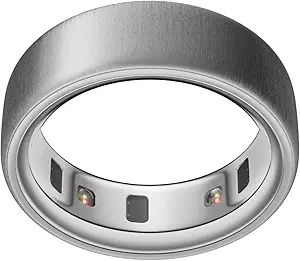
The Oura Ring 4 ($349–$499 + $5.99/mo) vs Apple Watch Series 10 ($399+) is the most-searched wearable comparison of 2026. NBC News reporter Harry Rabinowitz wore both simultaneously for most of 2025 before concluding: “Oura is a little more accurate when it comes to sleep data and predicting when I am sick, but the Apple Watch is always a close second. The Apple Watch is better for fitness, as it has built-in GPS, more detailed stats in certain workouts and a screen that can show you live stats as you exercise.”
| Specification | Oura Ring 4 | Apple Watch Series 10 |
|---|---|---|
| Hardware price | $349–$499 | $399–$499+ |
| Subscription fee | $5.99/month or $69.99/year | None (Apple Fitness+ optional at $9.99/mo) |
| Form factor | Titanium ring, worn on finger | Aluminium/titanium watch, worn on wrist |
| Display | None — app only | OLED touchscreen (42mm or 46mm) |
| Battery life | Up to 8 days (real-world 5–7 days) | 18 hours standard; up to 36 hours low-power |
| Built-in GPS | No | Yes |
| Sleep staging (Light/Deep/REM) | Yes — clinically validated | Yes — less depth, no stage-level scoring |
| HRV tracking | Nightly, comprehensive | Single morning measurement only |
| Readiness / Recovery score | Yes — Readiness Score (0–100) | No dedicated recovery score |
| Body temperature | Yes — nightly deviation from baseline | Yes — retrospective cycle use only |
| ECG / AFib detection | No | Yes — FDA-cleared |
| Crash & fall detection | No | Yes |
| Notifications | None | Full iPhone notifications |
| Workout types | 40+ (auto-detected) | 80+ (with live coaching) |
| AI health advisor | Yes — Oura Advisor (full biometric access) | Limited — Siri-based |
| Water resistance | 100 metres | 50 metres |
| Weight | ~4–6g (ring) | ~30–41g (watch) |
| Platform compatibility | iOS + Android | iOS only |
Category Verdicts: Oura Ring 4 vs Apple Watch Series 10
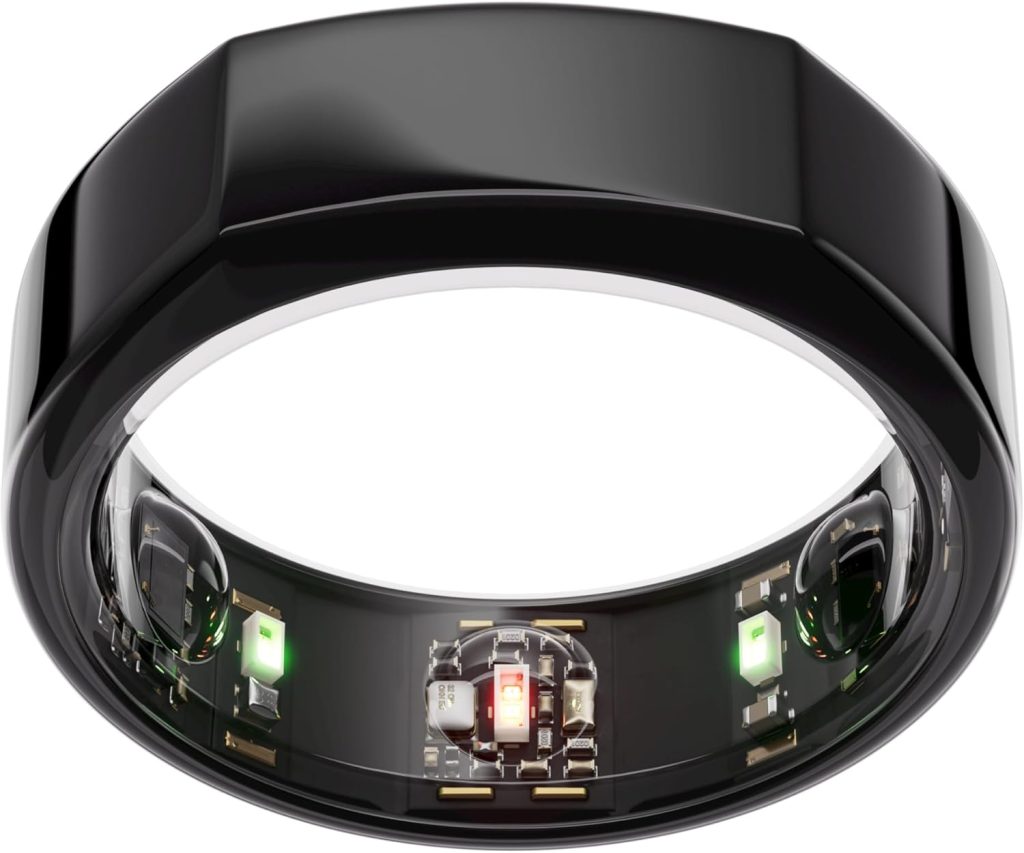
| Category | Winner | Why |
|---|---|---|
| Sleep accuracy | Oura Ring ⬡ | Clinically validated 4-stage sleep scoring; PSG-comparable accuracy (94.4% sensitivity). Apple Watch overestimates total sleep time by up to 30–45 minutes per independent research. |
| Battery life | Oura Ring ⬡ | 7–8 days vs 18 hours. No nightly charging anxiety. Apple Watch users commonly miss sleep data when charging overnight. |
| GPS & workout tracking | Apple Watch ⌚ | Built-in GPS, live pace, 80+ workout types, VO2 Max, Training Load. Oura lacks real-time workout feedback entirely. |
| Heart health (ECG, AFib) | Apple Watch ⌚ | FDA-cleared ECG and AFib detection. Oura does not measure ECG or detect arrhythmias. |
| HRV depth | Oura Ring ⬡ | Full overnight HRV tracking with trend history. Apple Watch measures HRV once in the morning only — insufficient for recovery analysis. |
| Comfort & discretion | Oura Ring ⬡ | 4–6g titanium ring vs 30–41g watch with glowing screen. Oura is indistinguishable from jewellery. Wareable notes 40% of Oura users also own an Apple Watch. |
| Notifications & smart features | Apple Watch ⌚ | Calls, texts, apps, Apple Pay, Siri. Oura has zero smart features — by design. |
| Cross-platform compatibility | Oura Ring ⬡ | Works with iOS and Android. Apple Watch is iOS-exclusive. |
| Stress tracking | Oura Ring ⬡ | Daytime Stress, Cumulative Stress (31-day), Resilience Score. Apple Watch Vitals app is newer and less developed. |
| Total value (all-in cost) | Tie | Oura: $349 + $5.99/mo = ~$421 year one. Apple Watch: $399 + $0. Long-term Oura costs accumulate; Apple Watch is a one-time purchase. |
| 📊 Independent Research Verdict A peer-reviewed study from Brigham and Women’s Hospital (published in Sensors, 2025) found the Oura Ring was the most accurate consumer sleep tracker in 4-stage sleep classification — 5% more accurate than Apple Watch and 10% more accurate than Fitbit — compared to polysomnography, the clinical gold standard. For sleep and recovery, the Oura Ring leads in peer-reviewed clinical evidence. |
3. Oura Ring vs Samsung Galaxy Watch 7
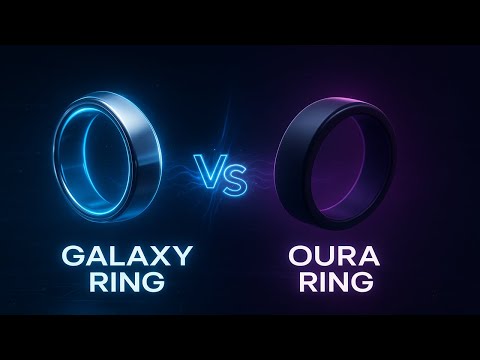
The Samsung Galaxy Watch 7 ($299–$329) is Android’s answer to the Apple Watch — and a popular alternative for Oura Ring shoppers on Android devices. It runs Wear OS with Samsung One UI Watch, offering Google integration, body composition analysis (BIA), ECG, and no smart ring subscription fee.
| Specification | Oura Ring 4 | Samsung Galaxy Watch 7 |
|---|---|---|
| Hardware price | $349–$499 | $299–$329 |
| Subscription fee | $5.99/month | None |
| Battery life | Up to 8 days | Up to 40 hours |
| Sleep accuracy (PSG validated) | Yes — clinical validation | Limited peer-reviewed validation |
| Body composition (BIA) | No | Yes — body fat %, skeletal muscle mass |
| ECG / AFib detection | No | Yes — FDA-cleared |
| Readiness / Recovery score | Yes — Readiness Score | Energy Score (less validated) |
| HRV tracking | Nightly — comprehensive | Yes, but less granular |
| GPS | No | Yes |
| Platform | iOS + Android | Android only (best with Samsung) |
Oura Ring vs Galaxy Watch 7: Verdict
The Samsung Galaxy Watch 7 wins on hardware price, no subscription, ECG, BIA body composition analysis, and Android ecosystem integration. The Oura Ring 4 wins on battery life (8 days vs 40 hours), clinically validated sleep accuracy, passive comfort for 24/7 wear, and the depth of recovery insights including HRV trends, Cumulative Stress, and Cycle Insights.
Note: As of 2026, Wareable reports that Oura has filed patent infringement actions against Samsung in the smart ring market — however, the Galaxy Watch 7 is a smartwatch and unaffected by this dispute.
4. Oura Ring vs Garmin (Forerunner & Fenix)
Garmin watches — particularly the Forerunner 965 ($599) and Fenix 8 ($799–$999) — occupy a different niche entirely: serious athletes and endurance sports tracking. Garmin’s Body Battery is a daily readiness score that shares conceptual DNA with Oura’s Readiness Score, but the implementation and data sources differ significantly.
| Specification | Oura Ring 4 | Garmin Fenix 8 / Forerunner 965 |
|---|---|---|
| Hardware price | $349–$499 | $599–$999 |
| Subscription fee | $5.99/month | None (Garmin Connect is free) |
| Battery life | Up to 8 days | 16 days (Fenix 8); 31 days low-power |
| GPS accuracy | No GPS | Multi-band GPS — best-in-class |
| Training Load / strain | Activity Score (basic) | Training Readiness, Acute Load, Recovery Advisor |
| Sleep accuracy (PSG validated) | Yes — clinical validation | No peer-reviewed validation published |
| Sleep staging | Yes — comprehensive | Yes — less validated |
| Body Battery (readiness) | Readiness Score (0–100) | Body Battery (0–100) — less clinical backing |
| HRV tracking | Nightly — comprehensive | HRV Status (7-day average) |
| Workout analytics | Basic auto-detection | Elite — VO2 Max, pace zones, running dynamics |
| Target user | Health & wellness focused | Endurance athletes, outdoor adventurers |
Oura Ring vs Garmin: Verdict
If you are a serious endurance athlete — runner, cyclist, triathlete, hiker — no smartwatch tracks performance more comprehensively than Garmin. The Fenix 8’s multi-band GPS, advanced running dynamics, and 31-day battery make it the best sports watch on the market in 2026.
If your primary goal is sleep, recovery, and long-term health awareness, the Oura Ring wins on sleep accuracy, discretion, and the depth of its nightly biometric data. Many endurance athletes use Garmin for training + Oura for recovery — the combination is common and powerful.
5. Oura Ring vs WHOOP 4.0
The WHOOP 4.0 is the closest philosophical sibling to the Oura Ring in the wearable market — both are screenless, passive biometric trackers focused on recovery and sleep rather than active workout coaching. The key difference: WHOOP targets athletes and takes a strain-first approach, while Oura takes a sleep and readiness-first approach.
| Specification | Oura Ring 4 | WHOOP 4.0 |
|---|---|---|
| Hardware cost | $349–$499 (one-time) | Free (bundled with subscription) |
| Subscription fee | $5.99/month | ~$30/month (WHOOP membership required) |
| Year 1 total cost | ~$421 (ring + 12 months sub) | ~$360 (subscription only) |
| Form factor | Titanium ring (finger) | Elastomer band (wrist) |
| Display | None | None |
| Battery life | Up to 8 days | Up to 5 days |
| Primary focus | Sleep, readiness, temperature, HRV | Strain, recovery, cardiovascular load |
| Sleep staging | Yes — PSG validated (94.4% sensitivity) | Yes — less clinical validation published |
| Readiness metric | Readiness Score (0–100) | Recovery % (0–100) |
| Strain / workout tracking | Basic activity score | Excellent — Strain Coach, cardiovascular load |
| Temperature tracking | Yes — nightly 0.1°C precision | Yes — skin temperature |
| Cycle Insights | Yes — clinically developed | Yes |
| AI coaching | Oura Advisor (personalised data) | WHOOP Coach (AI) |
| Discretion | Ring — jewellery-level discretion | Wristband — visible tracker |
Oura Ring vs WHOOP 4.0: Verdict
WHOOP wins on athlete-focused strain coaching, cardiovascular load tracking, and workout-recovery integration. The Strain Coach and Recovery % system is genuinely excellent for athletes who train hard and need daily guidance on pushing versus resting.
Oura wins on sleep accuracy (peer-reviewed), temperature-based illness and cycle detection, discretion (ring vs wristband), battery life, and the breadth of its health ecosystem including Cycle Insights, Cumulative Stress, and AI Advisor with personalised biometric access.
At $30/month, WHOOP’s subscription is 5× more expensive than Oura’s $5.99/month — a significant long-term cost difference that compounds over years. Over three years, WHOOP costs ~$1,080 in subscriptions vs ~$216 for Oura.
6. Sleep Tracking Accuracy: What the Science Says
Sleep tracking accuracy is where the Oura Ring builds its most decisive competitive advantage — and where the scientific evidence is most compelling. The following studies represent the current state of peer-reviewed clinical research as of 2026.
| Device | Overall Sleep Accuracy | Sleep Stage Accuracy | Source |
|---|---|---|---|
| Oura Ring Gen 3/4 | 94.4–94.5% sensitivity | 76.0–79.5% staging sensitivity | PMC / Sensors (2025) |
| Apple Watch | ≥95% sleep/wake | 50.5–86.1% (high variability) | PMC / Sensors (2025) |
| Fitbit | ≥95% sleep/wake | 61.7–78.0% staging | PMC / Sensors (2025) |
| Garmin | Not PSG-validated | Not published | No peer-reviewed data available |
| WHOOP | Comparable range | Less published validation | Limited peer-reviewed data |
Key finding from the Brigham and Women’s Hospital / Mass General Brigham study (published in PMC, 2025): “The Oura ring was not different from PSG in terms of wake, light sleep, deep sleep, or REM sleep estimation” — the only consumer device to achieve this benchmark across all four sleep stages.
An important nuance on Apple Watch sleep staging: independent evaluations cited by Oreate AI suggest that wrist trackers “often overestimate total time spent asleep by up to 30–45 minutes” — a meaningful inaccuracy if you are using sleep data to make health decisions.
For full scientific context on sleep stage physiology, see Wikipedia: Sleep Staging and the Sleep Foundation’s guide to sleep stages.
7. Battery Life: Ring vs Watch Compared
Battery life is one of the starkest practical differences between smart rings and smartwatches — and one of the most decisive factors for many buyers.
| Device | Claimed Battery | Real-World Battery | Charge Time |
|---|---|---|---|
| Oura Ring 4 | Up to 8 days | 5–7 days | 20–80 minutes |
| Apple Watch Series 10 | 18 hours (standard) | 14–16 hours | ~45–75 minutes |
| Apple Watch Series 10 (low power) | Up to 36 hours | 28–32 hours | ~45–75 minutes |
| Samsung Galaxy Watch 7 | Up to 40 hours | 24–36 hours | ~65 minutes |
| Garmin Forerunner 965 | Up to 31 days | 18–24 days | ~2 hours |
| Garmin Fenix 8 (Solar) | Up to 90 days | 40–60 days (solar) | ~2 hours |
| WHOOP 4.0 | Up to 5 days | 3–4 days | ~60 minutes |
| ⚡ The Apple Watch oura ring battery life Problem Because the Apple Watch lasts only 18 hours, most users charge it overnight — which means missing sleep tracking entirely. This creates a fundamental conflict: the watch needs overnight charging, but overnight is when sleep data is collected. Many Apple Watch users report days or weeks of gaps in their sleep data as a result. The Oura Ring charges for 20–80 minutes during the day and tracks your entire night without interruption. |
8. Workout & Fitness Tracking
This is the category where smartwatches win most decisively — and where Oura Ring’s limitations are most apparent.
What Oura Ring Tracks During Workouts
- Auto-detection: Identifies 40+ workout types automatically, including walking, running, cycling, swimming, and strength training.
- Heart rate zones: Tracks heart rate zones during manual workouts with an active membership.
- Activity Score: Daily activity score balancing movement against recovery status.
- Steps, active calories, equivalent walking distance: All continuously tracked via 3D accelerometer.
- What it cannot do: No live on-screen metrics. No GPS pace/distance. No audio coaching. No real-time feedback of any kind during exercise.
What Smartwatches Track During Workouts
- GPS: Real-time pace, distance, route mapping. Essential for runners, cyclists, and hikers.
- Live heart rate zones: Displayed on-screen in real time during exercise.
- VO2 Max estimation: Available on Apple Watch, Garmin, Samsung, and WHOOP.
- Training Load / Strain: Garmin and WHOOP both quantify cumulative training stress with precision.
- 80+ workout types: Apple Watch supports swimming, HIIT, rowing, yoga, team sports, and more with detailed stats for each.
- Post-workout recovery time: Garmin’s Recovery Advisor tells you exactly how many hours to rest before your next hard effort.
| 🏃 For Serious Athletes: Use Both The most common athlete configuration in 2026: wear an Oura Ring to monitor sleep and overnight recovery, then use a Garmin or Apple Watch during workouts for GPS and live performance metrics. As Wareable notes, 40% of Oura Ring users also own an Apple Watch — the combination is the most comprehensive wearable health stack available at the consumer level. |
9. Design, Comfort & Daily Wearability
Comfort and design are deeply personal — but the objective differences between a ring and a watch form factor are significant and worth understanding before purchasing.
| Factor | Oura Ring 4 | Smartwatch (Apple Watch / Garmin) |
|---|---|---|
| Weight | 4–6g | 30–50g (watch + band) |
| Sleep comfort | Excellent — ring on finger | Moderate — wristwatch during sleep can disturb |
| Discretion | Indistinguishable from jewellery | Clearly a tech device |
| Screen distraction | None — no screen | Notifications, buzzes, always-on display |
| Workout comfort | Excellent for most activities | Can interfere with grip, lifting, wrist-dominated sports |
| Colour options (2026) | 6 finishes: Silver, Black, Stealth, Gold, Rose Gold, Brushed Silver + Ceramic | Multiple case/band combinations |
| Water resistance | 100 metres | 50m (Apple Watch), 100m (Garmin Fenix) |
| Sauna safe | Yes | No — Apple Watch max 55°C |
| Ring sizing required | Yes — free Sizing Kit recommended | N/A |
As Tom’s Guide senior editor Kate Kozuch noted after ditching her Apple Watch for a month: “I think the Oura Ring is as gorgeous as a fitness tracker can get. I picked the rose gold version, and it fits in perfectly with my other jewellery.” However, she ultimately returned to the Apple Watch: “I missed so many more calls than usual that I’m completely convinced some of my friendships are now hanging by a thread.”
10. Health Monitoring: Sensors & Metrics Compared
The following table maps the full health monitoring capabilities of each major wearable category. Check marks indicate the feature is available; dashes indicate unavailable.
| Health Metric | Oura Ring 4 | Apple Watch | Samsung GW7 | Garmin Fenix |
|---|---|---|---|---|
| Sleep staging (PSG validated) | ✅ Best-in-class | ⚠️ Good | ⚠️ Moderate | ⚠️ Unvalidated |
| HRV (comprehensive, nightly) | ✅ Full nightly | ⚠️ Morning only | ⚠️ Moderate | ⚠️ 7-day avg |
| Readiness / Recovery score | ✅ Readiness (0–100) | ❌ No | ⚠️ Energy Score | ⚠️ Body Battery |
| Body temperature (nightly) | ✅ 0.1°C precision | ⚠️ Retrospective | ⚠️ Yes | ⚠️ Yes |
| SpO₂ (blood oxygen) | ✅ Overnight | ✅ On demand | ✅ Yes | ✅ Yes |
| ECG / AFib detection | ❌ No | ✅ FDA-cleared | ✅ FDA-cleared | ❌ No |
| Stress tracking (continuous) | ✅ Daytime + Cumulative | ⚠️ Vitals app | ⚠️ Stress score | ⚠️ Yes |
| Cycle Insights / fertility | ✅ Comprehensive | ⚠️ Moderate | ⚠️ Yes | ⚠️ Yes |
| Illness early detection | ✅ UCSF validated (2 days early) | ⚠️ Vitals alerts | ❌ No | ❌ No |
| Cardiovascular Age | ✅ Yes | ❌ No | ❌ No | ❌ No |
| Body composition (BIA) | ❌ No | ❌ No | ✅ Yes | ❌ No |
| VO2 Max | ❌ No | ✅ Yes | ✅ Yes | ✅ Best-in-class |
| GPS | ❌ No | ✅ Yes | ✅ Yes | ✅ Multi-band GPS |
| AI health advisor | ✅ Oura Advisor (personalised) | ⚠️ Siri limited | ⚠️ Samsung AI | ❌ No |
11. Price & Total Cost of Ownership
Upfront hardware price is only part of the story. Oura’s subscription model means the total cost of ownership increases every year — a critical consideration when comparing against subscription-free smartwatches.
| Cost Analysis | Oura Ring 4 | Apple Watch S10 | Samsung GW7 | Garmin Fenix 8 |
|---|---|---|---|---|
| Hardware price | $349–$499 | $399–$499 | $299–$329 | $799–$999 |
| Subscription (annual) | $69.99/year | None | None | None |
| Year 1 total (base model) | ~$419 | $399 | $299 | $799 |
| Year 2 total cost added | +$69.99 | $0 | $0 | $0 |
| Year 3 total (cumulative sub) | ~$559 ($419+$140) | $399 | $299 | $799 |
| Replacement cycle typical | 3–4 years | 2–3 years | 2–3 years | 4–6 years |
| 💰 The Subscription Trade-Off Over 3 years, the Oura Ring costs approximately $140 more in subscriptions than a subscription-free Samsung Galaxy Watch or Apple Watch — but Oura’s sleep accuracy advantage is clinically validated and consistent. Whether that premium is worth it depends entirely on how central sleep data is to your health goals. If you rarely open a sleep app, a subscription-free smartwatch is the more cost-effective choice. |
12. Ecosystem & Smartphone Compatibility
Platform compatibility is a practical constraint that can make the decision straightforward for some users:
| Device | iPhone (iOS) | Android |
|---|---|---|
| Oura Ring 4 | ✅ Full support | ✅ Full support |
| Apple Watch Series 10 | ✅ Native integration | ❌ Not compatible |
| Samsung Galaxy Watch 7 | ⚠️ Limited features | ✅ Full support (best with Samsung) |
| Garmin (all models) | ✅ Garmin Connect | ✅ Garmin Connect |
| WHOOP 4.0 | ✅ Full support | ✅ Full support |
The Oura Ring’s cross-platform compatibility is a significant advantage over the Apple Watch for Android users — it is the only health ring with full feature parity on both iOS and Android. It also integrates with Apple Health, Google Fit, Natural Cycles, Apollo Neuro, Dexcom CGM, and Strava, making it a versatile hub in any health tech stack.
13. Who Should Buy What? Decision Guide
Use this guide to identify the right device for your situation in under 60 seconds:
Buy the Oura Ring 4 if you:
- Prioritise sleep tracking — want the most clinically accurate sleep staging available in a consumer wearable in 2026.
- Hate charging every night — the oura ring 4 battery life means no overnight charging anxiety.
- Want passive, distraction-free monitoring — no screen, no notifications, no buzz. Just data when you check in.
- Use Android — and don’t want to be locked into the Apple ecosystem.
- Are a woman tracking menstrual cycles, fertility, pregnancy, or perimenopause via temperature and Cycle Insights.
- Want early illness detection — UCSF-validated temperature monitoring can flag physiological illness onset 2 days before symptoms.
- Wear it to a sauna, the beach, or your wedding — 100m water resistance and jewellery-level discretion.
- Value AI-driven health coaching with personalised access to your actual biometric data via Oura Advisor.
Buy a Smartwatch (Apple Watch / Garmin / Samsung) if you:
- Are a serious athlete — need GPS, live pace, training load, VO2 Max, or workout coaching.
- Want ECG or AFib detection — clinically important for cardiovascular health monitoring.
- Want notifications on your wrist — calls, texts, apps, Apple Pay, Siri.
- Are an Apple ecosystem power user — Apple Watch integrates with iPhone, iPad, Mac, and AirPods in ways nothing else matches.
- Dislike subscriptions — prefer a one-time hardware purchase with no recurring fee.
- Want fall detection or emergency SOS — a life-safety feature the Oura Ring cannot provide.
- Have a sub-$350 budget — Samsung Galaxy Watch 7 at $299 with no subscription is the best value.
Buy Both if you:
- Want the most complete health picture: Oura for sleep and overnight recovery data; smartwatch for GPS workouts and daytime metrics.
- Are a high-performance athlete who wants to optimise both training performance (Garmin) and sleep quality (Oura).
- Wear an Apple Watch during the day but want accurate sleep data at night without charging concerns — Oura handles the night shift.
| 📌 The 40% Stat According to Wareable, approximately 40% of Oura Ring users also own an Apple Watch. This is not accidental — the two devices genuinely complement each other rather than compete. Oura handles what happens while you sleep; Apple Watch handles what happens while you are awake. Together they create the most comprehensive passive health monitoring stack in consumer wearables in 2026. |
14. Can You Wear Both? The Oura + Smartwatch Combination
Yes — and many users do. The Oura Ring and a smartwatch do not interfere with each other technologically. There is no Bluetooth conflict, no data duplication issue, and no accuracy degradation from wearing both simultaneously. The practical combination that most users settle on:
| Time Period | Oura Ring Role | Smartwatch Role |
|---|---|---|
| Overnight (sleep) | Active — sleep staging, HRV, temperature, SpO₂ | Charging — or worn in low-power mode |
| Morning | Readiness Score reviewed in app | Morning activity, notifications begin |
| Workout | Background HR zone tracking | GPS, live pace, coaching, activity log |
| Daytime | Passive stress and activity monitoring | Notifications, payments, calls, time |
| Evening | Wind-down temperature baseline | Removed or switched to theatre mode |
Both devices sync independently to Apple Health (iOS) or their respective apps, giving you a unified health data view. For Apple Watch users, Oura’s data including sleep, activity, and heart rate can be shared to Apple Health, creating a single integrated health record across both ecosystems.
15. Frequently Asked Questions
Is the Oura Ring better than an Apple Watch for health?
It depends on what “health” means to you. For sleep accuracy, HRV, recovery, and long-term physiological awareness, the Oura Ring is peer-reviewed as more accurate — particularly for sleep staging. For real-time workout tracking, ECG, fall detection, and smart features, the Apple Watch is superior. Most health-optimisation enthusiasts use both.
Can the Oura Ring replace a smartwatch?
Not if you need notifications, GPS, ECG, or real-time workout feedback. The Oura Ring is a specialist passive tracker — deliberately screenless, and incapable of replacing the active functions of a smartwatch. However, for users whose primary health goal is sleep and recovery, the Oura Ring alone is genuinely sufficient for daily health monitoring.
Which is more accurate for sleep: Oura Ring or Apple Watch?
The Oura Ring. A 2025 peer-reviewed study from Brigham and Women’s Hospital / Mass General Brigham found the Oura Ring to be 5% more accurate than Apple Watch in 4-stage sleep classification compared to polysomnography. The Oura Ring was the only device “not different from PSG in terms of wake, light sleep, deep sleep, or REM sleep estimation.”
Does the Oura Ring work with Android?
Yes — fully. The Oura Ring app is available on both iOS and Android with complete feature parity. This makes it the preferred smart ring for Android users who cannot use the Apple Watch, and a cross-platform alternative for households with mixed iPhone/Android users.
Is a $5.99/month subscription worth it for the Oura Ring?
Yes, for most users who prioritise sleep and recovery. Without the subscription, the Oura Ring shows only three basic numeric scores with no detail — rendering most of its hardware capabilities inaccessible. Users who are primarily interested in active workout tracking may find the subscription less value-for-money, as workout tracking is Oura’s weakest category relative to smartwatches.
Can I wear my Oura Ring and Apple Watch at the same time?
Yes — there is no technical conflict between the two devices. Many Oura users wear the Oura Ring on their index or middle finger while wearing their Apple Watch on the opposite wrist, or switch between devices by time of day. Wareable reports that 40% of Oura users also own an Apple Watch.
Does the Oura Ring have GPS?
No. The Oura Ring does not have GPS. For users who need GPS for running, cycling, or hiking, a GPS-equipped smartwatch (Apple Watch, Garmin, or Samsung Galaxy Watch) is necessary. The Oura Ring is not designed for real-time workout feedback or route tracking.
What does the Oura Ring measure that smartwatches don’t?
The Oura Ring’s unique differentiators over most smartwatches: Cumulative Stress (31-day burnout tracking), clinically validated 4-stage sleep scoring, illness detection 2 days before symptoms (UCSF-validated), Cardiovascular Age, Resilience Score, and Oura Advisor AI with full personalised biometric data access. These are not available on Apple Watch, Samsung Galaxy Watch, or most Garmin devices as of 2026.
16. Related Hub Pages & External Resources
Internal Hub Pages — myringsizecalculator.com
| Hub Page | URL |
|---|---|
| 🏠 Main Oura Ring Hub | /oura-ring/ |
| ⏳ Oura Ring Generations Hub | /oura-ring-generations/ |
| 📊 Features & Health Tracking Hub | /oura-ring-features/ |
| ⚖️ Oura Ring Comparisons Hub | /oura-ring-comparisons/ |
| 🛒 Buying Guide Hub | /oura-ring-buying-guide/ |
| 🔧 Problems & Troubleshooting Hub | /oura-ring-problems/ |
| ♀️ Oura Ring for Women Hub | /oura-ring-for-women/ |
| 📏 Sizing Guide Hub | /oura-ring-sizing/ |
| 📱 App & Subscription Hub | /oura-ring-app/ |
| 🔄 Oura vs Smartwatch Hub (this page) | /oura-ring-vs-smartwatch/ |
| 📐 Free Ring Size Calculator | myringsizecalculator.com |
High-Authority External Sources
- PMC / NIH: Sleep Tracking Accuracy Study (2025) — Peer-reviewed comparison of Oura Ring Gen 3, Fitbit Sense 2, and Apple Watch vs polysomnography
- Sleep Foundation: Stages of Sleep — Science behind the sleep stages the Oura Ring tracks
- Wikipedia: Polysomnography — The clinical gold standard used to validate Oura Ring accuracy
- Wikipedia: Heart Rate Variability — Explains the HRV metric central to Oura Readiness Score
- Wikipedia: Photoplethysmography (PPG) — The sensor technology underpinning Oura Ring’s heart rate and HRV measurement
- NBC News: Oura Ring 4 vs Apple Watch — tested for 12 months — Year-long real-world comparison from NBC Select
- Wareable: Oura Ring vs Apple Watch — Expert editorial comparison with extensive hands-on testing
- Wareable: Best Smart Rings 2026 — Current smart ring market overview including Oura competitive landscape
- Garage Gym Reviews: Oura Ring vs Apple Watch — Athlete-focused comparison from certified trainers
- Tom’s Guide: One Month with Oura Ring vs Apple Watch — Extended real-world editorial test
- Reddit r/ouraring — Community Discussion — User experiences comparing Oura Ring with smartwatches in everyday life
- YouTube: Oura Ring vs Apple Watch 2026 Comparison — Video comparison playlist
Medical Disclaimer: This article is for informational purposes only. Neither the Oura Ring nor any smartwatch mentioned is a certified medical device capable of diagnosing medical conditions. Consult a qualified healthcare provider for any health concerns. All accuracy statistics are sourced from peer-reviewed publications and are current as of March 2026.
Last Updated: March 2026 | Author: MyRingSizeCalculator.com Editorial Health Tech Team | myringsizecalculator.com/oura-ring-vs-smartwatch/