
Choosing the right ring size is not just about comfort—it’s about ensuring your jewelry complements your hand both aesthetically and practically. A ring that fits poorly can spin around your finger, feel restrictive, or even slip off entirely. Beyond comfort, the correct ring size enhances the overall appearance of the ring, making it look intentional, elegant, and well-balanced.
For many people, understanding ring sizes can feel confusing, especially when it comes to small ring sizes. Petite hands and slender fingers, or younger wearers, often struggle to find rings that fit properly without resizing or custom ordering. This comprehensive guide will help demystify ring sizing with a special focus on small ring sizes, so you can confidently choose the perfect fit for your finger—whether you’re shopping for an engagement ring, wedding band, or everyday jewelry.
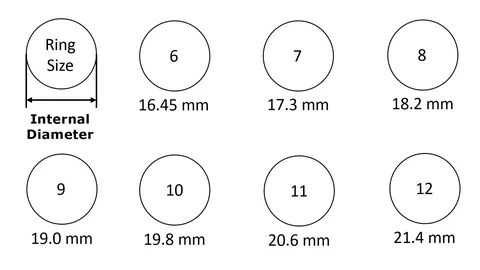
Compreender os tamanhos dos anéis
Ring size refers to the inner circumference or diameter of a ring, typically measured in millimeters. This measurement determines how comfortably a ring fits around your finger. While the concept sounds simple, ring sizing varies significantly across regions, making shopping—especially online—a bit tricky.
In the United States, ring sizes are measured using a numerical scale, usually ranging from size 3 to size 13, with half sizes available for precision. Other countries may use letters (such as the UK and Australia) or different numerical systems (like Europe and Asia). Because of these differences, it’s essential to rely on accurate measurements rather than assumptions.
If you want a quick and reliable way to calculate your size, you can use an online tool like the calculadora de tamanho de anel available at. This tool helps convert measurements and reduces the risk of ordering the wrong size.
O que é considerado um tamanho de anel pequeno?
For women, the average ring size is typically between sizes 6 and 7. With that in mind, any ring size below size 6 is generally considered a small ring size.
Common Small Ring Size Categories
- Size 5: Considered small but fairly common
- Size 4: Very small, often for petite or slender fingers
- Size 3 and below: Extremely small, often requiring custom sizing
Understanding where your finger falls within this range can help you shop more efficiently and avoid unnecessary resizing. For a deeper breakdown of small sizing options, this guide is especially helpful:
Size 4 Ring Finger: Who Is It For?
A size 4 ring is most commonly worn by individuals with very slender fingers. It’s popular among petite women, teenagers, or those with naturally narrow hands. Because this size is less common in mass-produced jewelry, finding ready-made rings can sometimes be challenging.
Size 4 rings:
- Provide a snug, secure fit
- They are ideal for delicate or minimalist designs
- Often require custom ordering for intricate settings
If you’re considering sizes below 4, it’s worth reading about the smallest ring sizes available and what options exist beyond standard sizing:
Um anel de tamanho 5 é pequeno?
Yes, a size 5 ring is considered small, though it is one of the more common small sizes and widely available. Many women with slim fingers find size 5 to be the perfect balance between comfort and security.
A size 5 ring:
- Fits slender fingers without feeling restrictive
- It is often used for promise rings and engagement rings
- Allows more flexibility for resizing compared to very small sizes
If you’re unsure whether size 5 is right for you, accurate measurement is essential, especially since finger size can change slightly with temperature, hydration, or weight fluctuations.
Como medir o tamanho do seu anel em casa
Measuring your ring size at home is easier than most people think. With a few basic tools, you can get a fairly accurate measurement before purchasing a ring.
Step-by-Step Measurement Guide
- Gather materials:
Use a strip of paper or string, a pen, and a ruler. - Wrap around your finger:
Place the paper or string snugly around the base of your finger. It should feel comfortable—not tight. - Mark the overlap:
Mark where the paper or string overlaps. - Measure the length:
Use a ruler to measure the length in millimeters. - Match with a size chart:
Compare your measurement to a reliable size chart or calculator.
If you need help converting measurements—especially millimeters—this resource is useful.
Tips for Accurate Ring Size Measurement
To ensure the most precise results, keep these tips in mind:
- Measure your finger at the end of the day, when it’s at its largest
- Avoid measuring in cold temperatures, as fingers shrink
- Measure multiple times for consistency
- Consider knuckle size if your knuckles are wider than your finger base
If you’re measuring someone else’s ring size discreetly, these expert tips can help:
Small, Medium, and Large Ring Sizes Explained
Understanding general size categories can simplify the shopping process:
Small (S) Ring Sizes
- Sizes 3 to 5
- Best for slender or petite fingers
- Often need customization
Medium (M) Ring Sizes
- Sizes 6 to 8
- Considered average
- Widely available in most designs
Large (L) Ring Sizes
- Sizes 9 and above
- Suitable for broader fingers
- Often require wider bands for comfort
Customizing Rings for the Perfect Fit
Ring Resizing
Most rings can be resized by adding or removing metal. However, some designs—such as eternity bands or intricate-set rings—may have resizing limitations.
Encomendas personalizadas
For very small ring sizes, custom-made rings are often the best solution. Custom orders allow:
- Precise sizing
- Design flexibility
- Better long-term comfort
If you’re dealing with unusual measurements, learning about 70 mm ring size measurements and similar conversions can be helpful.
Choosing the Right Ring Style for Small Fingers
The right design can make a small ring size look elegant rather than overwhelming.
Best Styles for Small Ring Sizes
- Delicate bands: Make fingers appear longer
- Minimalist designs: Avoid visual bulk
- Proportionate gemstones: Balance is key
- Oval, pear, or marquise stones: Create an elongating effect
Avoid overly wide bands or heavy settings that can overpower slender fingers.
Trending FAQs About Small Ring Sizes
1. What is the smallest ring size available?
The smallest standard size is usually size 3, but many jewelers offer custom sizes smaller than that.
2. Are small ring sizes harder to resize?
Yes, extremely small sizes can be more challenging, especially for complex designs.
3. Do small fingers need thinner bands?
Generally, yes. Thin bands tend to look more proportional and comfortable.
4. Can my ring size change over time?
Absolutely. Temperature, weight changes, and aging can all affect finger size.
5. Is it better to size up or down for small rings?
It’s usually safer to size slightly up, especially if your fingers swell.
Conclusão
Finding the perfect ring size—especially for small sizes—is essential for both comfort and style. A well-fitting ring feels natural, looks balanced, and becomes something you enjoy wearing every day rather than one you constantly adjust.
By understanding how ring sizing works, measuring accurately, and using reliable tools and guides, you can avoid common mistakes and make confident purchasing decisions. Whether you’re choosing a size 4, size 5, or exploring custom options, taking the time to find the right fit ensures your ring enhances both your hand and your confidence.
With the right size and style, your ring won’t just look beautiful—it will feel like it was made just for you.