
Choosing the right ring size is one of the most important steps when purchasing jewelry, whether it’s an engagement ring, a wedding band, or a thoughtful gift. A well-fitting ring feels comfortable, looks elegant, and stays securely on the finger. On the other hand, an incorrect size can cause discomfort, require resizing, or even result in loss.
Female ring sizes are often misunderstood because finger size varies widely based on anatomy, lifestyle, and even climate. This comprehensive guide breaks down everything you need to know about women’s ring sizes—from understanding small and standard sizes to estimating without direct measurement—so you can make a confident, informed decision.
How Female Ring Sizes Work
In the United States, women’s ring sizes typically range from 3 to 13, with most falling between 5 and 9. These sizes are based on the inner circumference or diameter of the ring, measured in millimeters. Each incremental size represents a small but meaningful difference in fit.
While the sizing system itself is standardized, the way a ring feels on the finger is influenced by several factors, including finger shape, knuckle size, band width, and daily swelling. Understanding these nuances can help you avoid unnecessary resizing, which may be costly or difficult—especially for intricate designs.
For a foundational overview of how sizing systems work and why they vary, a smart guide to ring sizes is an excellent place to start.
What Is Considered a Small Ring Size for a Woman?
A small ring size for a woman is generally considered to be between sizes 3 and 5. These sizes are often associated with slimmer fingers and are common among women with petite hands or narrow finger structures. However, small ring sizes are not limited to any age group or body type.
Finger size can fluctuate throughout the day due to temperature, hydration, and physical activity. Cold weather can make fingers shrink slightly, while heat or exercise can cause noticeable swelling. Because of this, someone who usually wears a size 5 might occasionally need a size 5.5 or even a 6 for comfort.
Tamanhos típicos e padrão de anéis para mulheres
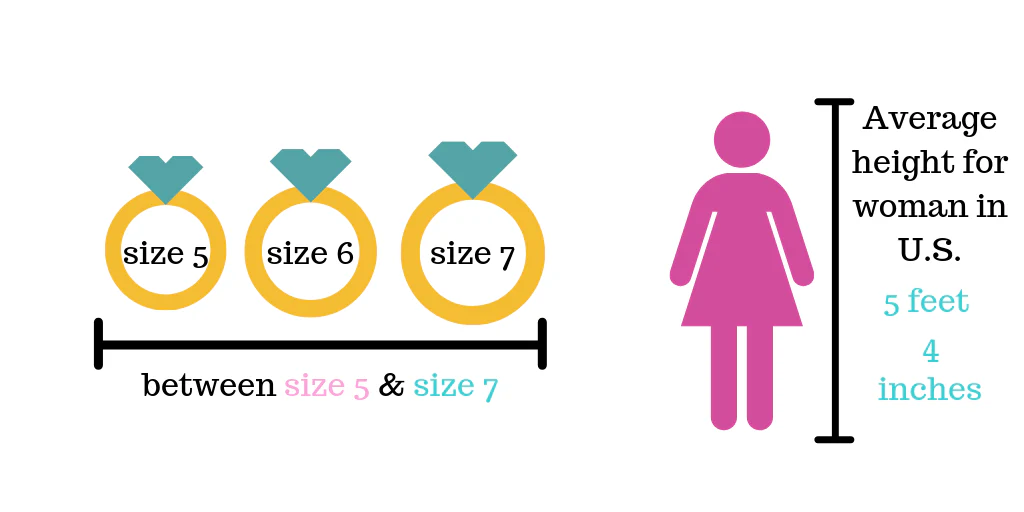
O most common ring size for women is size 7, with the typical range falling between sizes 6 and 8. Jewelers often use this range as a baseline when estimating ring sizes for gifts or surprise purchases.
That said, averages vary depending on region, genetics, and lifestyle. Cultural differences, diet, and overall body composition can influence average hand size. For a deeper look at how these factors affect sizing, understanding women’s average ring sizes offers useful insight.
Are Men’s and Women’s Ring Sizes the Same?
One common question is whether men’s and women’s ring sizes differ. Technically, the numbering system is the same, but the average sizes and proportions differ significantly.
Women’s rings are usually designed with slimmer bands and smaller average sizes, while men’s rings tend to be wider and heavier, often requiring larger sizes for comfort. If you’re curious about how these differences impact sizing choices, are men’s and women’s ring sizes the same? explains this distinction in detail.
How to Guess a Woman’s Ring Size Without Measuring
Sometimes measuring directly isn’t an option—especially when planning a surprise. While no guessing method is perfect, the following approaches can help you estimate a reasonable size.
Estimativa por altura e peso
Body proportions can provide a rough starting point. Taller individuals or those with a broader build may have larger hands, while petite individuals often have smaller fingers. However, this method should be used cautiously, as hand size doesn’t always correlate neatly with height or weight.
Comparação com jóias existentes
Borrowing a ring that the person already wears (on the same finger, if possible) is one of the most reliable estimation methods. Measure the inner diameter and compare it to a sizing chart. This method also helps you understand whether the wearer prefers a snug or relaxed fit.
Perguntar a amigos ou familiares
Close friends or family members may already know the person’s ring size or have shopped for jewelry with them before. This discreet approach often yields surprisingly accurate results.
DIY Methods to Measure Ring Size at Home
When professional measurement isn’t available, at-home methods can be both practical and effective.
Utilizar uma fita métrica
A soft, flexible measuring tape can be wrapped around the base of the finger. Make sure it’s snug but not tight. Record the measurement in millimeters and compare it to a ring size chart.
Criando um calibrador de anéis caseiro
A strip of paper or string works well in a pinch. Wrap it around the finger, mark the overlap point, and measure the length with a ruler. Repeat the process a few times for consistency.
Using a Dedicated Ring Sizing Tool
Reusable sizing tools are inexpensive and far more accurate than household substitutes. If you’re considering this option, choosing the right ring sizing kit can help you decide which tool best suits your needs.
Determining Ring Size Without Any Sizer
If you don’t have access to a tape, string, or sizing tool, there are still workable alternatives.
Measuring an Existing Ring
Use a ruler or calipers to measure the inside diameter of a ring that fits comfortably. Be sure to measure from inner edge to inner edge for accuracy.
Estimating from Other Fingers
If the wearer uses rings on other fingers, you can estimate based on those sizes. Keep in mind that dominant hands are usually slightly larger, and fingers vary in width even on the same hand.
What If You’re Between Ring Sizes?
Being between sizes is extremely common, especially for women whose fingers swell throughout the day. In most cases, choosing the slightly larger size is the safer option for comfort.
If you’re unsure how to handle this situation, finding the perfect fit in between ring sizes offers practical advice on whether to size up or down based on lifestyle and ring style.
Frequently Asked Questions (FAQs)
1. What is the most common ring size for women?
Size 7 is the most common women’s ring size, followed closely by sizes 6 and 8.
2. Are small ring sizes rare?
No. Sizes 3–5 are less common but still widely available and perfectly normal.
3. Does finger size change over time?
Yes. Weight changes, pregnancy, aging, and temperature can all affect finger size.
4. Should I size up if I’m unsure?
In most cases, yes—especially if the ring will be worn daily and resizing is possible.
5. Is it better to measure in the morning or evening?
Evening measurements are usually more accurate, as fingers tend to be slightly larger later in the day.
Final Thoughts on Choosing the Right Female Ring Size
Understanding female ring sizes goes beyond memorizing numbers. It involves recognizing how finger anatomy, daily changes, and ring design influence fit. While estimation methods are helpful, professional measurement remains the most reliable option whenever possible.
A properly fitted ring should slide over the knuckle with mild resistance and sit comfortably without pinching or spinning excessively. Whether you’re shopping for yourself or planning a meaningful surprise, taking the time to understand ring sizing ensures the ring will be worn and cherished for years. For additional tools, charts, and guidance, Calculadora do tamanho do meu anel is a valuable resource throughout the sizing process.