
Choosing the right ring size for your index finger is essential for both comfort and appearance. Unlike engagement or wedding rings, index finger rings are often statement pieces, which makes proper sizing even more important. A ring that’s too tight can feel restrictive, while one that’s too loose may spin or slip off.
In this guide, you’ll learn how to measure your index finger accurately, understand how index finger sizing compares to other fingers, and discover practical tips to ensure a perfect fit. Whether you’re shopping online or in-store, this article will help you make a confident and informed choice.
Understanding Ring Sizes for Different Fingers
Ring sizes are not universal across all fingers. Each finger has a slightly different shape and width, which directly affects sizing. Knowing these differences is crucial before selecting a ring—especially for the index finger.
Ring Size Differences Between Fingers
Here’s how finger sizes typically compare:
- Index Finger: Larger than the ring and pinky fingers, often used for bold or statement rings
- Middle Finger: Usually the largest finger, requiring the biggest ring size
- Ring Finger: Most commonly sized; average sizes range from 6–7 for women
- Pinky Finger: Smallest finger, often between sizes 3–5
- Thumb: Usually wider and requires a significantly larger size
Because the index finger is more prominent and frequently used, it tends to be thicker at the base and knuckle. This makes accurate sizing especially important.
If you want to compare finger sizes in more detail, this guide on which finger wears which ring size explains the differences clearly.
How Ring Sizes Are Measured
Ring sizes are measured in either:
- Circumference (mm)
- Inner diameter (mm)
- Standard sizing systems (US, UK, EU)
Most jewelers use circumference-based sizing, which measures the distance around your finger in millimeters.
If you’re unfamiliar with ring measurements, this ring size conversion chart can help you convert between systems easily.
How to Measure Your Index Finger Ring Size
There are several reliable ways to measure your index finger. Accuracy is key, so it’s best to try more than one method.
Method 1: Use a Ring Sizer (Most Accurate)
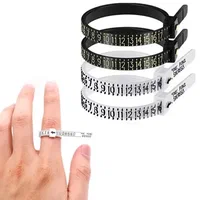
A ring sizer is the most reliable way to measure your finger. It consists of either:
- A looped measuring band
- A set of sample rings
Simply slide the ring over your index finger until you find one that fits comfortably—snug but not tight.
If you don’t own one, follow this guide on how to measure your ring size at home.
Method 2: Measure with Strings or Paper
This is a popular at-home method:
- Wrap a piece of string or paper around your index finger
- Mark where the ends meet
- Measure the length in millimeters
- Compare it to a ring size chart
Be careful not to pull too tight. Even a 1–2 mm difference can change your ring size.
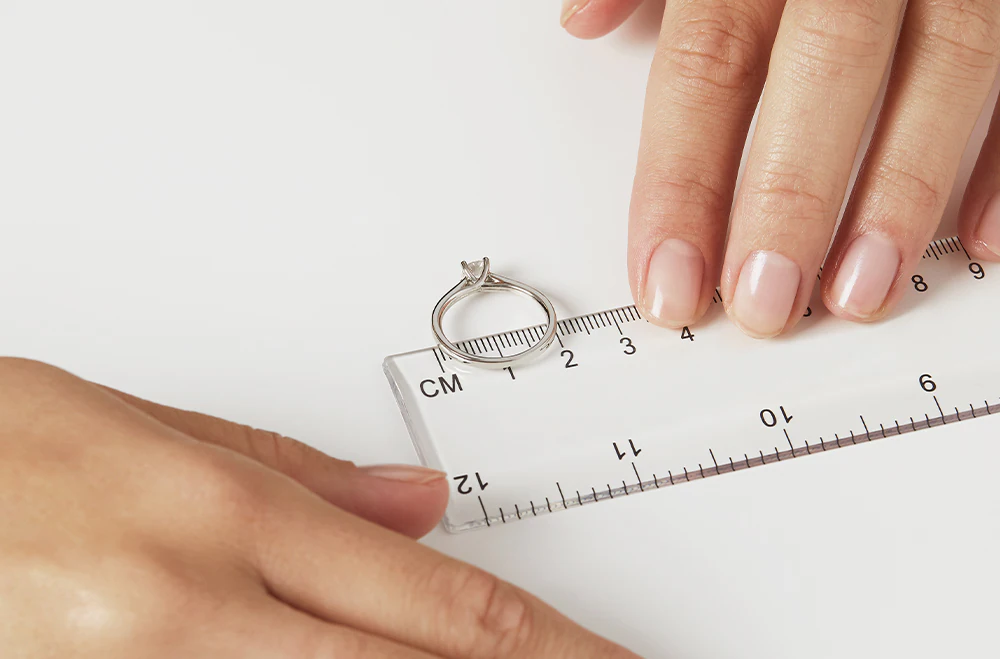
Method 3: Measure an Existing Ring
If you already own a ring that fits your index finger:
- Measure the inner diameter with a ruler
- Match the measurement to a sizing chart
This method works well if you’re buying a replacement or upgrading a ring.
Method 4: Estimating with a Margin
If you’re estimating without tools, always leave a slight margin. Index fingers tend to swell more than other fingers, especially during warm weather or physical activity.
When in doubt, size up rather than down.
Tips for Finding the Right Index Finger Ring Size
Consider Knuckle Size
The knuckle is often wider than the base of the finger. Your ring should:
- Slide over the knuckle comfortably
- Sit securely once in place
If your knuckle is much wider, consider a half-size larger.
Account for Temperature Changes
Finger size fluctuates throughout the day:
- Larger in warm temperatures
- Smaller in cold conditions
Measure your finger in the evening when it’s at its largest for the most accurate result.
Try Measuring Multiple Times
Take at least two or three measurements on different days to ensure consistency. This reduces the chance of choosing the wrong size.
Visit a Professional Jeweler
For the most accurate results, a jeweler can measure your finger professionally. They can also advise on sizing based on ring width and style.
Average Index Finger Ring Sizes
Although sizes vary, here’s a general guideline:
Women’s Index Finger Sizes
- Typically range between size 6 and 8
- Most common sizes: 6.5 – 7.5
Men’s Index Finger Sizes
- Typically range between size 9 and 11
- Larger hands may require sizes 12+
These are averages, not rules. Finger shape and knuckle width play a major role.
Index Finger Rings vs Other Finger Rings
Index finger rings are often:
- Wider
- More decorative
- Worn as statement pieces
Because of this, they often feel tighter than rings worn on other fingers. If you’re switching a ring from another finger, you may need to size up.
If you’re also shopping for other fingers, you may find these helpful:
Common Mistakes to Avoid
- Measuring when hands are cold
- Measuring only once
- Ignoring knuckle size
- Assuming all fingers use the same size
- Choosing a tight fit for wide bands
Avoiding these mistakes ensures long-term comfort and wearability.
Final Thoughts
Finding the perfect index finger ring size doesn’t have to be complicated. With the right measuring techniques, a little patience, and an understanding of how finger sizes differ, you can confidently choose a ring that fits well and feels comfortable.
Whether you’re buying a fashion ring, a signet ring, or a meaningful piece of jewelry, proper sizing ensures your ring looks great and stays secure. For accurate sizing tools, charts, and professional guidance, explore the resources available at MyRingSizeCalculator.com and make your next purchase with confidence.