
When shopping for rings—whether it’s an engagement ring, wedding band, promise ring, or a meaningful gift—one question comes up again and again: are men’s and women’s ring sizes the same?
The short answer is no, they are not usually the same. However, the full explanation is much more nuanced. Ring sizing depends on anatomy, design, comfort preferences, and even lifestyle factors. Misunderstanding these details can lead to discomfort, resizing costs, or a ring that simply doesn’t get worn.
This in-depth guide explains everything you need to know about men’s vs. women’s ring sizes, how to convert between them, the factors that affect sizing, and how to ensure the perfect fit—especially when buying rings online.
Understanding Ring Sizes: The Basics
Ring sizes are determined by measuring the circumference or diameter of a finger, usually in millimeters. This measurement is then translated into a standardized size number or letter, depending on the country.
The most common sizing systems include:
- US & Canada: Numeric (e.g., size 6, 7, 10)
- UK & Australia: Alphabetical (e.g., L, N, R)
- Europe: Numeric based on circumference (e.g., 52, 54, 60)
If you’re unsure which system applies to you, using an online sizing resource, such as a detailed calculadora de tallas de anillos, can simplify the process and reduce errors.
Are Men’s and Women’s Ring Sizes the Same?
The Simple Answer: Usually No
Men’s and women’s ring sizes are not inherently interchangeable, mainly due to differences in average finger size and ring design.
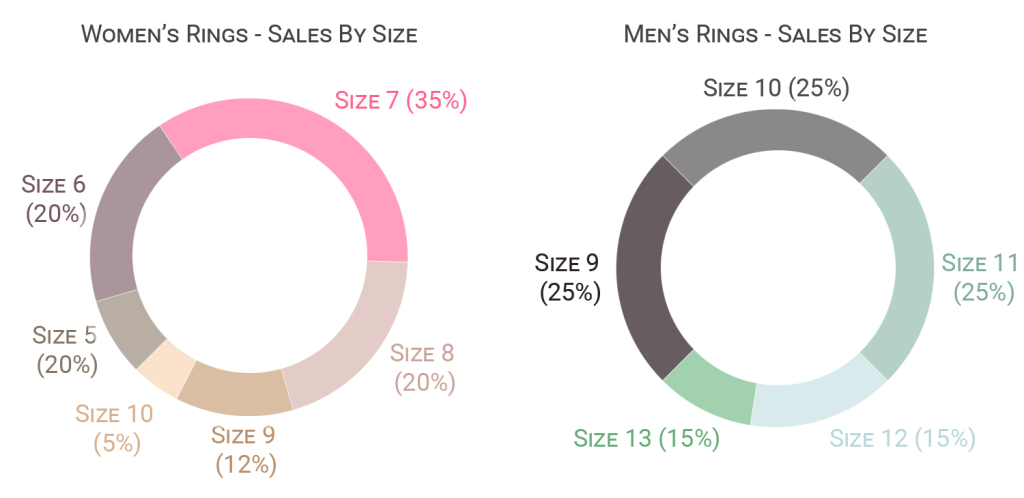
- Women’s ring sizes most commonly range from US size 3 to 9
- Men’s ring sizes usually fall between US size 8 and 14
While there can be overlap—such as a woman wearing a size 8 or a man wearing a size 7—the sizing categories exist to reflect typical anatomical differences.
To explore this further, you may find it helpful to read a dedicated guide on men’s ring sizing, which breaks down averages, fit types, and sizing tips in detail.
Why Men’s and Women’s Ring Sizes Differ
1. Average Finger Size and Anatomy
Men generally have larger hands and thicker fingers, which naturally leads to larger ring sizes. Women, on average, have slimmer fingers, especially at the base, resulting in smaller sizes.
That said, ring size is highly individual, and many people fall outside these averages.
2. Ring Width and Band Thickness
One of the biggest but often overlooked differences lies in ring width.
- Men’s rings are typically wider and heavier, often ranging from 6mm to 10mm
- Women’s rings are usually narrower, commonly between 2mm and 5mm
Wider bands fit more snugly, meaning a wider ring may require a slightly larger size than a narrow ring, even on the same finger. This is a crucial detail explained further in guides that focus on men’s ring measurements and band width considerations.
3. Ring Design and Style Preferences
Men’s rings often favor:
- Minimalist or bold designs
- Thicker profiles
- Comfort-fit interiors
Women’s rings more commonly include:
- Slimmer bands
- Decorative settings
- Gemstones and intricate detailing
These design choices influence how a ring feels on the finger and whether sizing adjustments are needed.
Converting Women’s Ring Sizes to Men’s Ring Sizes
Although men’s and women’s rings use the same numeric scale in the US, the conversion often comes down to fit and width, not just numbers.
Approximate Conversion Guide (US Sizes)
- Women’s 5 ≈ Men’s 4.5
- Women’s 6 ≈ Men’s 5.5
- Women’s 7 ≈ Men’s 6.5
- Women’s 8 ≈ Men’s 7.5
- Women’s 9 ≈ Men’s 8.5
This half-size difference accounts for typical differences in band width and comfort fit. For best accuracy, always consider the exact ring style rather than relying solely on size numbers.
Factors That Affect Ring Size for Men and Women
Ring size isn’t static—it can change based on several factors:
1. Temperature and Time of Day
- Fingers swell in heat and shrink in cold
- Measurements are most accurate in the evening
2. Lifestyle and Activity Level
- Active individuals may prefer a slightly looser fit
- Desk jobs may allow for a snugger feel
3. Weight Fluctuations and Health
Changes in weight, pregnancy, or medical conditions can affect finger size over time.
4. Comfort Fit vs. Standard Fit
Comfort-fit rings have a rounded interior and may feel looser than standard flat-interior rings, often requiring a slightly smaller size.
Understanding these variables is especially important when buying rings as a surprise. Helpful tips on guessing ring size accurately can significantly improve your chances of success.
How to Measure Ring Size Accurately
At-Home Methods
- Printable ring size charts
- String or paper strip method
- Adjustable ring sizers
Professional Measurement
Visiting a jeweler remains the most accurate option, especially for wide bands or high-value rings.
If you prefer measuring at home, consider using a dedicated sizing tool. A comprehensive guide to choosing the right ring-sizing kit can help you select a reliable, reusable option.
Men’s vs. Women’s Average Ring Sizes
While individual sizing varies, averages can be helpful for gifts:
- Average women’s ring size: US 6–7
- Average men’s ring size: US 9–10
For deeper insights into these averages and what they mean in real-world sizing, a detailed explanation of women’s average ring sizes offers valuable context.
Buying Rings Online: How to Get the Right Fit
Online shopping offers convenience but requires extra care:
- Always double-check sizing guides
- Read product descriptions for band width
- Look for stores offering free resizing or easy returns
Using a reliable ring size calculator before placing an order can reduce the risk of mistakes and save time and money.
Custom Sizing, Resizing, and Unisex Rings
Custom and Resizable Rings
Custom sizing ensures a perfect fit, especially for unusual finger shapes. However, not all materials—such as tungsten or ceramic—can be resized.
Unisex Ring Sizing
Unisex rings blur traditional size categories, focusing on comfort and simplicity. While flexible in design, proper measurement is still essential for the best fit.
Trending FAQs About Men’s and Women’s Ring Sizes
1. Can a woman wear a men’s ring size?
Yes. Ring sizes are unisex in numbering, but women may need a smaller size adjustment due to band width.
2. Is a size 7 the same for men and women?
Numerically yes, but the fit can feel different depending on ring width and design.
3. What is the most common men’s ring size?
The most common men’s ring size is between US 9 and 10.
4. Do wider rings require a bigger size?
Yes. Wider bands typically feel tighter and often require going up by half a size.
5. How can I secretly find someone’s ring size?
You can borrow an existing ring, measure it discreetly, or use smart guessing techniques outlined in professional ring sizing guides.
Conclusion: So, Are Men’s and Women’s Ring Sizes the Same?
Men’s and women’s ring sizes are not the same by default, but they are part of the same sizing system. The real differences come from average finger size, ring width, design, and comfort preferences.
Understanding these factors empowers you to:
- Convert sizes accurately
- Choose comfortable designs
- Buy rings confidently, even online
A well-fitted ring isn’t just about numbers—it’s about comfort, security, and long-term wearability.